Do Townhomes qualify for FHA Loans?
Say you found a townhome you like. The layout works, the neighborhood feels right, and you can already picture yourself living there. Then comes the less exciting part: figuring out how to pay for it. If you are considering an FHA loan, one of your first questions may be, do townhomes qualify for FHA loans? In many cases, yes. Townhomes can qualify for FHA financing when the home meets the applicable FHA loan requirements, and the buyer qualifies the mortgage.
There is one thing that can make the answer a little less straightforward. A townhome can look like a townhome but be legally classified as either a single-family attached home or a condominium. That difference matters when you are using FHA financing. Your FHA loan minimum credit score, down payment, and the property’s eligibility will matter as well.
It sounds like a lot, but most buyers only need to understand a few key points.
*Looking for townhomes for sale? Explore available properties at MSR Communities.
Can You Use FHA Financing for a Townhome?
Yes, you can buy an eligible townhome with FHA financing. These loans are usually offered through FHA-approved lenders, which makes the process feel pretty familiar. For buyers who qualify, the minimum down payment can be as low as 3.5%.
The financing works much like it would for other eligible homes:
- You apply through a lender.
- The lender reviews your finances.
- The property goes through the required appraisal.
With a townhome, however, there is another question your lender may need to answer:
- How is the property legally classified?
- That can determine what happens next.
Also, read: Townhome Living: Pros, Cons, and Costs
A Townhome Is Not Always Classified the Same Way
This is where things can get confusing.
Two homes can share walls, sit in similar communities, and both be advertised as townhomes. One may be a single-family attached property, while the other is legally a condo.
From a buyer’s point of view, they may not feel very different. For FHA financing, the distinction can be important.
If the property is legally a condominium, FHA condo requirements may apply. The condominium project could already have FHA approval. In certain cases, an individual unit in a project without FHA approval may also be considered through FHA’s Single-Unit Approval process.
FHA also recognizes certain townhouse-style properties as Site Condominiums when they meet its requirements.
You do not need to figure this out by looking at the listing photos or digging through FHA rules yourself. Ask your lender or real estate professional how the property is legally classified. They can help determine which requirements apply.
Also, read: Townhouses vs. Condos: Which Appreciates Faster?
What Does “FHA Approved Townhome” Mean?
While searching online, you may run across the phrase FHA-approved townhomes. Usually, this becomes relevant when the townhome is legally a condominium.
If the condo project already has FHA approval, that can make the eligibility question more straightforward. HUD maintains information on condominium projects that have been approved for FHA financing.
But what if the community is not on the approved list?
It may still be worth asking your lender about the property.
FHA has a Single-Unit Approval process that can allow certain individual condo units to qualify even when the overall project does not have FHA approval. The property and project have to meet FHA requirements. For example:
- The project must be complete and ready for occupancy.
- The project must have at least five dwelling units.
The important part for a buyer is not knowing every rule behind that process. It is knowing that “the project isn’t FHA approved” does not always mean “this townhome cannot be purchased with an FHA loan.”
Your lender can look at the actual property and give you a more useful answer.
What Do You Need to Qualify for an FHA Loan?
Now to the part that applies to you. FHA financing has requirements for borrowers as well as properties. Down payment, credits, occupancy, and the amount you will need to borrow can all come into play.
For eligible borrowers:
- A qualifying credit score of 580 or higher may allow maximum financing, which can mean a down payment as low as 3.5%.
- A credit score between 500 and 579 may limit financing to 90% of the home’s value, which generally means a down payment of at least 10%.
Those numbers are useful starting points, but they are not the entire approval process. The lender will then take a closer look at your finances as part of the mortgage application process. In some cases, lenders may also set their own criteria beyond the FHA’s minimum guidelines.
Meeting the minimum FHA does not automatically get the lender to approve your loan.
*Looking for newly built townhomes? Find your next home with MSR Communities.
What About the FHA Loan Minimum Credit Score?
It is easy to get stuck on the credit score when researching mortgages. After all, it is one of the first numbers you see when reading about FHA loans.
The FHA loan minimum credit score guidelines allow borrowers with scores of 580 or above to be considered for maximum financing. Borrowers with scores from 500 through 579 are limited to 90% financing.
Still, your credit score is only part of the conversation.
Your lender will review your application as a whole and determine whether you qualify. A lender can also have stricter credit requirements than FHA’s minimum.
So, if you are unsure whether your credit is where it needs to be, a conversation with an FHA-approved lender can be more useful than trying to judge your options from one number alone.
Also, read: What Credit Score Do You Need to Buy a House?
The Townhome Has to Qualify, Too
You may be ready for the mortgage, but the home needs to be ready for it as well.
A property purchased with an FHA-insured mortgage goes through an FHA appraisal. The appraisal is used to determine the home’s value and evaluate whether the property meets FHA requirements.
That does not mean every townhome needs a sparkling new kitchen, perfect paint, or floors that have never seen a scratch. FHA property requirements are concerned with the condition of the home, including issues that could affect safety or soundness.
The appraisal should not be confused with a home inspection.
A home inspection gives you a more detailed look at the condition of the property. That can be useful when you are deciding whether you feel comfortable buying the home and understanding what maintenance or repairs may be ahead.
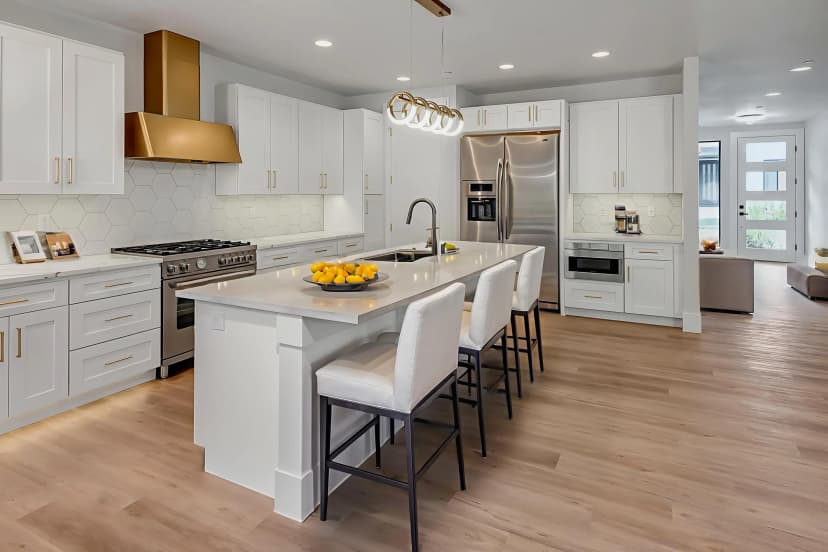
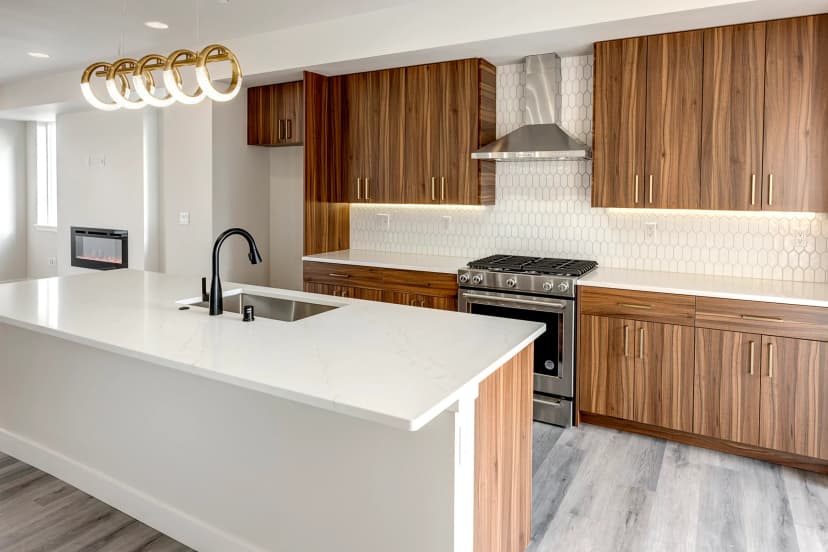
The backsplash may be the fun part. Knowing what is behind the walls matters, too.
Also, read: What Is APR?
You’ll Generally Need to Live in the Home
Planning to make the townhome your home? Then this part is fairly simple.
FHA purchase financing is generally meant for a property that will be your principal residence. Under FHA occupancy rules, at least one borrower generally needs to move into the house within 2 months of signing the mortgage security instrument and intend to live there for at least one year, subject to applicable exceptions.
That means an FHA purchase loan generally is not the route for someone buying a townhome solely as an investment property.
For a buyer searching for a place to actually live, however, this requirement usually fits the plan.
Also, read: How Well Do Townhomes Appreciate?
Don’t Forget About FHA Loan Limits
The amount you can finance with an FHA loan also depends on where you are making the purchase.
FHA sets mortgage limits by area, and they can change from year to year. For 2026, the FHA limit for a one-unit property begins at $541,287 in lower-cost areas and reaches $1,249,125 in high-cost areas. Special limits can apply in certain locations.
You probably do not want to spend your Saturday morning comparing county loan-limit tables before touring homes. Fortunately, you do not have to.
Your lender can check the current FHA limit for the area where you are shopping and tell you how it relates to the townhome you are considering.
Also, read: Tax Benefits on Home Loans for Buyers: What You Need to Know
Found a Townhome You Like? Ask These Questions
Once a townhome starts feeling like a real possibility, that is a good time to get specific.
Ask how the property is legally classified:
- If it is a condo, find out whether the project has FHA approval or if a Single-Unit Approval could be an option.
- Confirm that the purchase works within the FHA loan limit for the area.
It is also worth asking about homeowners’ association fees. They may be a normal part of townhome living, but they still belong in your monthly budget.
And if you are using FHA financing, ask your lender whether there is anything about the property or your application that needs attention.
A few clear answers can be far more helpful than reading another dozen mortgage articles and ending up with another dozen browser tabs open.
Also, read: What to Look for When Exploring New Homes Near You?
Can You Buy a Townhouse With an FHA Loan?
So, can you buy a townhouse with an FHA loan? Yes, as long as you and the property meet the requirements that apply to your purchase.
The process does not have to begin with learning every FHA rule. Start with your own budget and financing options. When you find a townhome you like, confirm how it is legally classified and let your lender determine which FHA requirements apply to that particular property.
Then you can spend more time thinking about the things that actually make a house feel like yours.
At MSR Communities, townhome living is about having a place that fits everyday life while leaving room for what comes next. Financing is one part of getting there, and understanding your options can make that part feel a little less intimidating.
There will still be forms to sign and questions to ask. That comes with buying a home. But once the financing details start making sense, you can get back to the better question: Can you see yourself living here?